The Global IPv4 Shortage and Its Far-Reaching Effects
The Internet uses numbers called Internet Protocol addresses. Each device needs one number. A computer needs one. A phone needs one. A server needs one. A sensor needs one. These numbers allow devices to send and get data. The system most networks still use is called Internet Protocol version 4. People call it IPv4. It was created many years ago when few people used the Internet. At that time the designers thought the supply of numbers was very large. IPv4 gives a total of about 4.3 billion unique numbers. The early builders of the Internet believed this was enough for the future. The world then changed. More people went online. New devices appeared. Homes started to use many gadgets. Businesses moved work to the web. The pool of numbers began to run out.
Table of Contents
The IPv4 shortage is now real. Regional Internet Registries give addresses to organisations. These registries once had many free numbers. Today most of their pools are empty. New users cannot get fresh IPv4 space from these central stores. Companies that need addresses must now buy them from others or share them with special tools. This creates competition. It also creates cost. Small companies and start-ups can find it hard to buy addresses when prices rise. The IPv4 shortage makes planning networks more complex. Engineers must think about every address. They must make sure no number is wasted. They must also think about future growth.
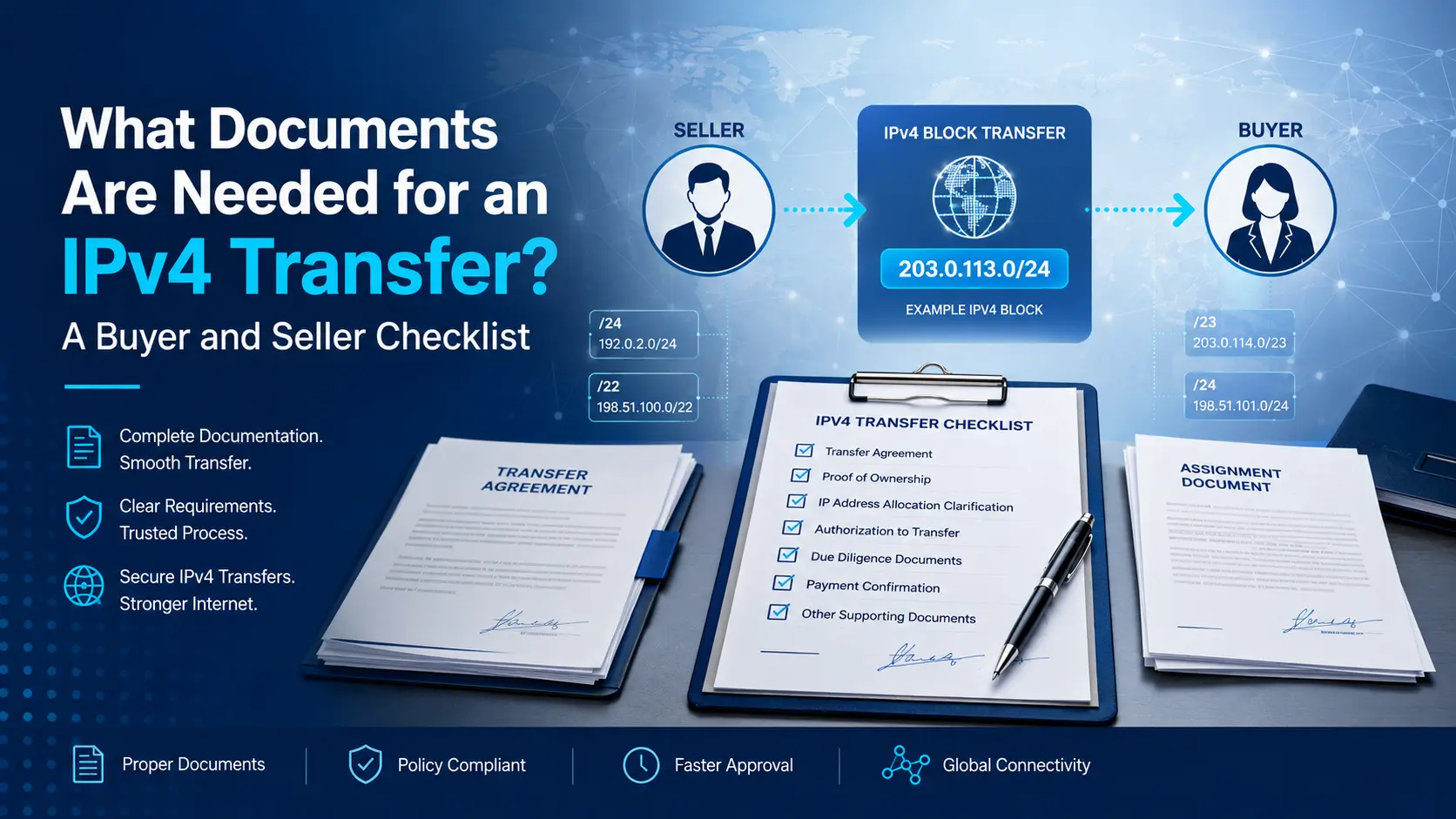
The next system, called IPv6, exists. IPv6 has almost unlimited numbers. It can give each device a unique address. It also brings new features for security and routing. Yet many networks do not use it fully. They keep using IPv4. Some networks stay on IPv4 because old systems cannot change. Some networks stay because the change costs money. Others stay because partners or customers still depend on IPv4. This slow move to IPv6 keeps the value of IPv4 high. It creates a strong trade in IPv4 blocks. Addresses are now like property. People sell and buy them. Brokers match sellers and buyers. Prices go up when demand is strong.
Some organisations received huge blocks of addresses in the early years. Many of these blocks are not used. These groups can sell or lease their spare addresses for profit. This has created a market where IPv4 addresses are treated like assets. The price of a block can reach millions of dollars. Some companies even buy other companies to get their IPv4 addresses. This market changes how networks grow. It also raises fairness issues. Rich companies can pay more. Poorer ones must use workarounds or delay expansion. Policy makers watch these trends and debate rules for transfers. They also track the movement of address blocks to keep records correct.
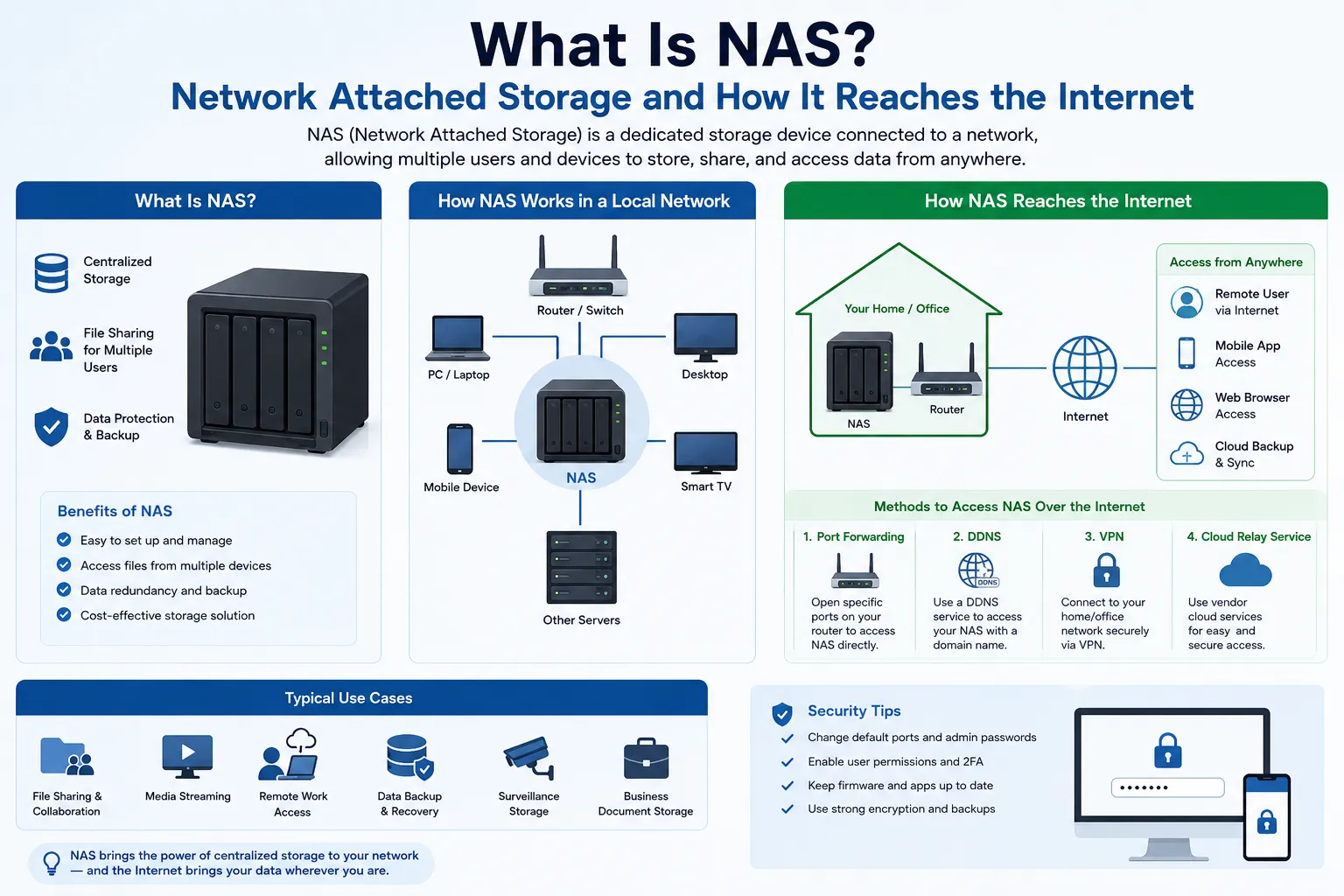
Many networks try to stretch the life of IPv4 with tricks. Some use network address translation, often called NAT. NAT lets many devices share one public number. A home router does this when it lets several phones and laptops use one address. Large Internet service providers use bigger NAT systems to share a small pool of numbers with millions of customers. NAT slows some services and makes security checks harder. Still it keeps networks running when addresses are short. Others reclaim unused numbers inside their networks. They search for old servers or equipment that no longer need addresses and reuse those numbers. Each method buys time but none can remove the shortage.
Changing Patterns in IP Allocation
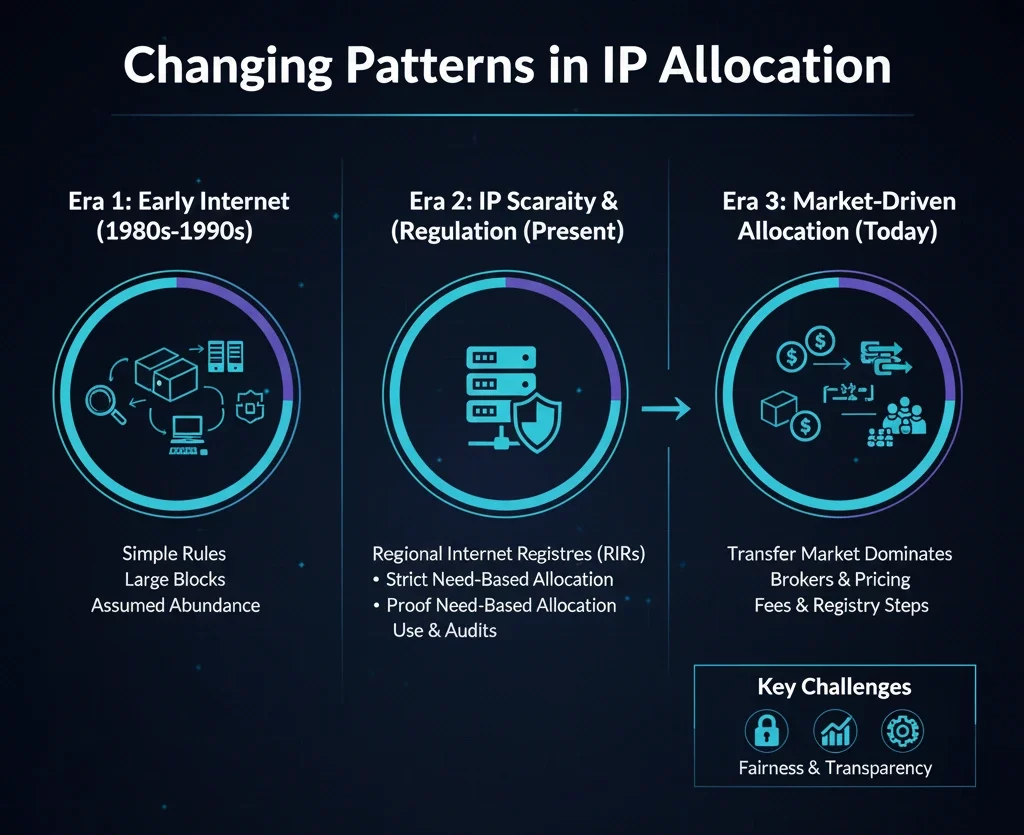
The way addresses are given out has changed over time. In the early days of the Internet, rules were simple. People asked for blocks of addresses and often got very large ones. Universities, research labs and early technology firms received millions of addresses even if they only needed a small part. There was no idea that billions of devices would one day compete for the same pool. As use grew, the Regional Internet Registries set strict rules. New requests must show need. Applicants must prove they use existing addresses well. Audits check that blocks are not wasted.
Today almost no one gets new IPv4 space from a registry. Almost all new users must get addresses from the transfer market. Holders of spare blocks can sell them. Brokers help match buyers and sellers. Prices depend on size and demand. A small block with a clean record sells fast. A large block with problems may take longer. Buyers must also pay transfer fees and follow registry steps. This market has grown into a global business. Some companies keep addresses as an investment. Others trade them across regions to find the best price.
This trade raises questions of fairness and control. Some transfers are hard to see. Some blocks move between countries or between company divisions without clear public records. Critics say the trade goes against the open spirit of the Internet. Supporters say the trade rewards efficient use and gives a way to meet urgent needs. Whatever the opinion, the market now plays a central role in how IPv4 space moves. It changes the balance of power between old holders and new entrants. It also forces all players to think about cost when planning networks.
Planning is now a key task. Engineers must predict how many addresses they need in the next year and in the next five years. They must decide when to buy more and when to start moving to IPv6. Many use small technical steps to save addresses. Carrier grade NAT lets providers serve many users with few public numbers. Variable length subnet masks let engineers divide networks into precise parts to reduce waste. Reclamation projects search for hidden gaps where unused addresses can be recovered. Each step demands care. Each step adds complexity. The more complex the network becomes, the higher the cost to maintain it.
Technical and Operational Responses to Scarcity
Networks use many tricks to keep working under shortage. The most common is network address translation. NAT hides many private addresses behind one public address. A home uses NAT when many family devices share one connection. An office uses NAT when many staff computers connect through a single firewall. Internet providers use carrier grade NAT when millions of customers must share a small pool. NAT allows more devices to go online. It also creates problems. Some games, voice calls or peer connections fail when direct links are not possible. Security teams find it harder to track attacks when many users share one address. Law enforcement needs more time to follow digital evidence.
Another method is address reclamation. Companies search old records and network plans to find unused blocks. They recover these blocks and reuse them. This saves money but requires careful checks so that old services are not broken. Some networks reuse private address ranges inside different parts of the organisation. They keep these parts separate so numbers do not clash. Engineers also use variable length subnet masks to give just the right size to each network segment. A small office may get a small segment. A large data centre may get a bigger one. This avoids wasted addresses.
IPv6 is the true long term fix. It uses 128 bits instead of 32 bits. This makes an address pool so huge it will not run out. IPv6 also has built-in features for automatic setup, improved security and better routing. But moving to IPv6 is not easy. Old devices may not support it. Old software may break. Staff may not have the skills to run two systems at once. Many networks use dual stack operation where IPv4 and IPv6 run together. This keeps service working while new systems appear. But it also doubles work. Operators must maintain two address plans, two routing tables and two sets of security rules.
Cloud computing adds more pressure. Platforms like Amazon Web Services, Microsoft Azure and Google Cloud give customers virtual networks. Each customer wants public addresses for servers and services. Cloud providers often charge extra for dedicated IPv4 numbers. They encourage users to move to IPv6 by making IPv6 easier to get or cheaper to use. Customers who stay with IPv4 face rising costs. This push and pull shows how the IPv4 shortage shapes business models and technical choices at the same time.
Economic and Strategic Implications for the Future
The lack of IPv4 space now affects money and strategy as much as technology. Prices for addresses rise each year. A company that owns a large block holds a valuable asset. Some firms sell addresses when they no longer need them. Some buy companies only to gain their address space. Investors sometimes value a company higher because of its address holdings. For small firms the high price makes growth hard. A start-up that wants to launch a new service must pay for addresses or use complex sharing methods. This can slow innovation in poorer regions where budgets are small.
Governments and Internet registries try to keep records and rules clear. Regional Internet Registries check every transfer. They keep databases of who owns which block. Yet global trade is hard to control. Some blocks move across borders with little notice. Some sellers hide behind shell companies. Disputes arise when ownership is unclear. Some call for stronger rules. Others prefer to let the market work. Some say high prices will push everyone to IPv6 faster. Others fear that high prices will create a gap between rich and poor users.
Network operators must choose a path. They can keep buying IPv4 addresses and use more sharing methods. This may work now but costs will rise. They can start to move to IPv6. This needs investment in equipment, staff and training. Some combine both. They buy a small number of IPv4 addresses for critical services and use IPv6 for growth. Cloud providers and large technology firms often lead this move. They see early adoption as a way to avoid future costs and to offer new features.
The IPv4 shortage shows that the Internet is not endless. The numbers that once seemed infinite have limits. The need for careful planning is now clear. Companies, governments and network engineers must manage every address with care. They must think about cost, growth and security at the same time. They must plan for a future where IPv4 and IPv6 will live side by side for many years. The IPv4 shortage continues to shape how networks grow and how people and devices connect across the world.
Why i.lease Helps Businesses Plan Better
i.lease helps businesses approach IPv4 access as a structured market decision instead of a blind dependency on unclear sourcing or informal arrangements.
For companies that need flexibility, Lease IPv4 Address can support deployment with operational assistance, LOA-related workflows, and registry-aware coordination. For organisations that need long-term control, Buy IPv4 address through a structured marketplace can help reduce sourcing and transfer uncertainty. For holders of unused address space, Sell IPv4 address through a marketplace can help turn idle resources into business value through a more organized process.
The goal is not only to obtain IPv4. The goal is to avoid being trapped by hidden authority claims, unclear provider chains, weak documentation, or governance friction that only becomes visible when your business is already exposed.
A safer IPv4 strategy should consider supply, contract structure, transfer path, routing readiness, reputation, provider accountability, and registry-related risk. Waiting until a policy issue or transfer delay affects your business gives you fewer options and less control.
If your business depends on IPv4, do not wait until someone else’s interpretation controls your timeline. Plan your IPv4 access before governance risk becomes a business problem.
Also Read: What Is IPv4 Address Exhaustion?
Also Read: What Happens When Your IP Allocation Runs Out
FAQs
What is the main reason for the IPv4 shortage
The number of internet users and devices keeps growing. Each device needs an IPv4 address. The supply of these addresses is fixed. This creates a shortage.
Can companies still get IPv4 addresses
Yes, but it is not easy. Companies can buy addresses from brokers or join transfer markets. The process can take time and costs more than before.
Does IPv6 solve the IPv4 shortage
Yes, IPv6 gives many more addresses. It is designed to replace IPv4. But many networks still use IPv4, so the change is slow.
How does the shortage affect cloud services
Cloud providers need many addresses for servers and users. The shortage raises costs. Providers use address sharing and subnetting to save space.
What can small businesses do to manage IPv4 limits
They can plan their networks carefully. They can reuse unused addresses. They can move to IPv6 when possible to avoid future problems.
How does i.lease help businesses with IPv4 access?
i.lease helps businesses evaluate IPv4 leasing, Buy IPv4, and Sell IPv4 options through a continuity-first approach focused on source clarity, routing readiness, reputation checks, renewal accountability, documentation, and operational reliability.