How IP Address Allocation Works in ISPs
 Stephanie
A simple guide that shows how ISPs get IP addresses and give them to users. It also looks at the steps, the problems, and the rules behind it.
Table of Contents
- ISPs get IP address blocks from RIRs. They give these to users by using DHCP, fixed IPs, or shared IPs through NAT.
- IANA and the RIRs help control the system. They make sure the addresses are used well and not repeated. This matters more now as IPv4 runs out and IPv6 starts to grow.
Introduction
Once a device is connected to the Internet, it inevitably requires an IP (Internet Protocol) address. It helps data reach the right place. But most people do not think about how they get that address. This process is called IP address allocation.
Internet Service Providers (ISPs) play a big part in this system. They receive blocks of IP addresses from bigger groups and then assign them to homes, businesses, and devices. Because of the rapid growth of the internet, the way these addresses are managed has become more complex.
This article explains how IP address allocation works. It looks at how ISPs get addresses, how they give them to users, and how the whole system is kept in order. It also explores what happens now that older IP address types are running out and how a new version is changing the game.

What is IP address allocation?
IP address allocation means handing out special numbers to devices in a network. These numbers are called IP addresses. Each one lets data go to the right place. All IP addresses are handled by an organization named IANA. IANA is an Internet number allocation agency. It does not give addresses to users. It gives big blocks to five main groups. These are called Regional Internet Registries, or RIRs. Each one looks after a part of the world.
There are five RIRs. ARIN is for North America. RIPE NCC is for Europe and some parts of Asia. APNIC works in the Asia-Pacific region. LACNIC covers Latin America. AFRINIC is for Africa. IANA sends a large group of addresses to each RIR. The RIR then gives smaller parts to internet providers.
These providers are called ISPs. ISP means Internet Service Provider. They give IP addresses to homes, offices, and schools. These users then go online with those addresses. The address they use starts with IANA. Then it moves to the RIR. After that, it goes to the ISP.This way, all addresses stay unique. It also helps groups get what they need. No one gets more than they should.
Role of IANA and regional registries
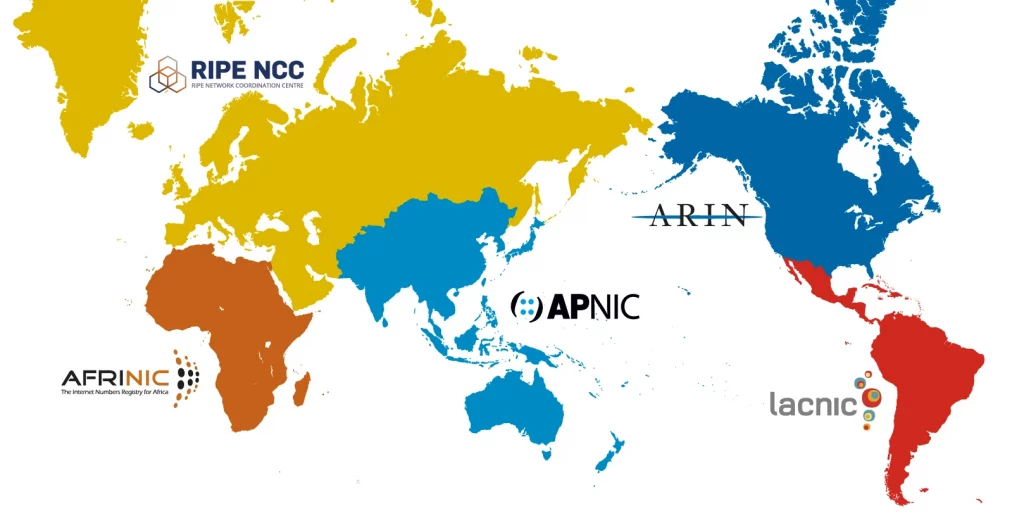
IANA is the group that looks after all IP addresses in the world. It keeps the full list of available numbers. It breaks this list into big chunks. These chunks are called CIDR blocks. IANA gives these blocks to five large groups. ARIN, RIPE NCC, APNIC, LACNIC and african work all over the world.
ARIN handles North America. RIPE NCC works in Europe and some parts of Central Asia. APNIC covers countries in Asia and the Pacific. LACNIC is responsible for managing Latin America and the Caribbean region. African affairs are the responsibility of AFRINIC.Each group gets blocks from IANA. Then they give out smaller blocks to other groups.
The next step goes to ISPs and smaller registries. These groups give IP addresses to people and companies. The rules for how they give out these addresses are set by the RIRs. They must follow these rules each time they give out IPs.
The number of old-style IP addresses, called IPv4, is almost gone. Most of the blocks have been used. There are very few left. This is why many networks now prepare for IPv6, which has more space.
How ISPs request and receive IP blocks
ISPs need to get IP addresses from a regional internet group. First, they must ask the RIR in their area. They do not just ask. They must also give clear reasons. They need to show why they need the IPs. They must list how many users they have. They must say how they plan to use the addresses.
Most new ISPs start with only a small block. The RIR gives them just enough to begin. This is called a slow-start. The ISP must use most of the block. Then it must show proof of use. After that, it can ask for more. The RIR will check the request again. If the ISP used the last block well, it can get a bigger one next time.
This step-by-step way helps stop waste. It keeps address space from being taken by groups that do not use it. It also helps the RIRs see which networks are growing.
ISP internal assignment methods
DHCP for dynamic addresses
Many internet providers use DHCP to hand out IP addresses. This method is fast. It is also easy to manage. DHCP stands for Dynamic Host Configuration Protocol. It gives out IPs for a short time only.
When a device wants to go online, it sends out a signal. It says it needs an IP address. The server that runs DHCP hears this call. Then it picks an unused IP from a list. It gives this number to the device. The number works for a short time. This time is called a lease.
Once the lease ends, the device must ask again. It might get the same number. It might get a new one. If the user turns off the device, the number can go back into the list. Someone else may get it next. This setup works well for homes and offices. These places do not need the same IP all the time.
Static assignment
Some users do not want their IP address to change. They ask the ISP for a fixed IP. The provider gives them one. This IP stays the same every day.
A fixed IP is helpful for special tasks. One example is when someone runs a server at home or work. Another is when a company uses remote access tools. A static IP helps people find the same device again and again. That is why these users pay extra for it.
NAT for shared addresses
IPv4 addresses are running low. Many ISPs cannot give one public IP to each user. So they use a trick. This trick is called NAT. It stands for Network Address Translation.
NAT lets many people share one public IP. At home, your router does this too. It has one IP on the outside and gives out many private ones inside. The ISP can do the same thing on a larger scale.
When many users go online, NAT changes their private IPs into the same public one. It keeps track of all connections. It makes sure the replies go back to the right user. This works well most of the time. But some apps and services may not like it. Some things need port forwarding or special fixes.
The concept of CIDR and why is it important

Classless inter-domain routing is CIDR. This is an effective means of dividing and managing the IP address space. It replaced the old way, which used fixed groups like Class A, Class B, and Class C. Those groups had set sizes. Some were very large. Some were small. This setup often wasted many addresses.
CIDR does not use fixed sizes. It lets groups use only what they need. An address block in CIDR can be any size. This is written with a “slash” and a number, like /24 or /22. A /24 gives 256 IPs. A /22 gives 1024 IPs. The number shows how many bits are used for the network. Fewer bits mean more IPs in the block.
This makes it easy to give out just the right number of addresses. It also keeps routing tables smaller. Routers do not need to track as many separate blocks. This helps speed up the network.
CIDR also makes it easier for ISPs to handle both small and large customers. They can give small blocks to small users. They can give big blocks to big users. They do not need to waste IPs or split networks in strange ways.
IPv4 exhaustion and its impact
IPv4 is the old type of IP address. It was made long ago. It can hold around 4.3 billion addresses. At the time, this number looked big enough. But the internet grew fast. More people, more devices, and more websites needed IPs.
By the year 2011, all IPv4 addresses had been handed out. IANA gave out the last blocks to the five RIRs. After that, the RIRs slowly gave out the rest to ISPs and other users. Now, almost all IPv4 pools are empty. Some RIRs have a few left, but not many.
Because of this, ISPs cannot get new IPv4 blocks like before. This causes problems. New networks need addresses, but there are not enough to go around. So ISPs must find ways to keep going.
One way is to use NAT. With NAT, many users can share one public IPv4 address. Another way is to start using IPv6. IPv6 has many more addresses, so there is no risk of running out soon. But IPv6 needs extra setup, and not all systems support it yet.
Some ISPs buy IPv4 blocks from others. These deals cost money. Prices for IPv4 addresses keep going up. This adds to the pressure. Many networks now must plan carefully how they use each IP.
Transition to IPv6
IPv6 is the newer type of IP address. It was made because IPv4 does not have enough space. IPv6 uses longer numbers. It can make many more addresses. Each device can get its own.
ISPs started using IPv6. IPv4 was almost used up. But they did not stop using IPv4. Many websites still use IPv4. Some tools only work with IPv4. Some old systems do not support IPv6.Most networks now use both. This is called dual-stack. It means one device gets two addresses. One is IPv4. One is IPv6. If both sides use IPv6, it works. If not, they switch to IPv4.
This setup takes more work. ISPs must handle two sets of rules. They must check both types of addresses. They must test every service again. Some networks still block IPv6. This makes the change slow.New phones and laptops support IPv6. Big websites use it. Some users already run full IPv6. But many still use both types today.
How DNS relates to IP addresses
DNS means Domain Name System. It helps users find websites without using numbers. People type names like google.com or bbc.co.uk. They do not type long strings of numbers. DNS turns the name into an IP address. Then the device can reach the right server.
Each name is linked to one or more IP addresses. DNS servers are used for record storage. Your device will ask the DNS server for the address, look up the name and return the number when you open the website.
Your ISP often runs the DNS servers you use. They check the records and make sure the name points to the right IP. That IP must come from the block of addresses the ISP owns. The ISP gets that block from the regional group. It then gives smaller parts to users or systems.
DNS also helps with email and other services. It points to the right place for each job. If the DNS record is wrong, people cannot reach the service. That is why the ISP must keep the records correct and up to date.
Security and governance
Each RIR watches how IP addresses are used. They ask ISPs and other groups to give usage data. This means they must show how many addresses they use and who uses them. If they do not follow the rules, they cannot get more addresses.
“A secure network is essential to protect against cyber threats, and to ensure the confidentiality and integrity of information... We must take steps to mitigate the most urgent of these pervasive concerns such as Border Gateway Protocol vulnerabilities.”
— Internet Society (ISOC)
RIRs also check for abuse. Some groups try to keep extra addresses without using them. Some try to sell them in secret. These actions break the rules. So the RIR checks the records and runs audits. If something looks wrong, they ask questions. If needed, they can take addresses back.
ISPs must follow clear rules. They must not waste address space. They must give out IPs in fair ways. They must also keep good records and answer checks when asked.
Some people now try new ideas. One idea is to use blockchain. It could track IP address use in a public way. This might help stop cheating. But these systems are still in early tests. Most RIRs still use old systems with strong rules.
Expert quotes
People who work with IP address rules often give advice. They explain how the system works and why rules must be followed.One quote comes from the official guidelines used by Regional Internet Registries:
“New ISPs will receive a minimal amount based on immediate requirement thereafter blocks may be increased based on utilisation verification.”
— Regional Internet Registries
This means a new internet provider gets only a small number of addresses first. They must use most of them before asking for more. The RIR will check if the first block was used well. If it was, they can get more addresses. If not, they must wait.
Another quote comes from a network tools guide at GeoPlugin:
“A hierarchical system assigns IP addresses ensures there’s enough uniqueness and efficient allocation.”
— GeoPlugin
This means the whole system has levels. It starts with IANA, then goes to RIRs, then to ISPs. Each part hands out IPs in order. This setup helps keep every IP different. It also stops confusion. It makes sure people do not get the same address by mistake.
These quotes help explain why the system is strict. Each step keeps the network working in a fair and safe way.
Challenges for ISPs
ISPs face many problems when they manage IP addresses. These problems come from rules, limits, and changes in how the internet works.
Scarcity of IPv4
The first big problem is that IPv4 addresses are almost gone. There are not enough left for new users. So ISPs cannot just ask for more. They must share what they already have. Because of this, many ISPs use NAT. NAT lets many users go online using one public IP. This works, but it is not perfect. It can break some apps. It can make tracing users harder. So it is not the best fix.
Complexity of dual-stack
Another issue is the use of two address types. Most ISPs must run both IPv4 and IPv6 at the same time. This setup is called dual-stack. It sounds simple, but it is not. It means they must run two systems. They must manage two sets of rules. They must test everything twice. This makes the job harder. It also costs more money. Staff must know both systems. Tools must support both. Some customers only want one type. The ISP must handle all of this.
Accurate usage reporting
The last challenge is about keeping good records. RIRs want to know how IP addresses are used. ISPs must track every address. They must show who is using it and when. If they cannot show this, they may not get more IPs. This takes time and effort. It also means ISPs need systems to watch and log all use. Some small ISPs do not have these tools. They must build them or buy them.
Trusted IPv4 Leasing for Business Growth
Get enterprise-grade IPv4 space quickly, with seamless deployment and end-to-end management.
Get Started with i.leaseFAQs
What is the difference between allocation and assignment?
Allocation is when RIRs give a block to an ISP. Assignment is when the ISP gives individual IPs to customers.
Why is IPv4 running out?
IPv4 has only ~4.3 billion addresses. Most were allocated by 2011. RIRs exhausted their pools over the next years.
What is CIDR notation?
CIDR lets address blocks be any size, like /24 or /20, improving efficiency over old classful system.
Why do ISPs sometimes use NAT?
It is allowed for multiple users to share one public IP address at NAT. This is very helpful for Internet service providers to use IPv4 addresses.
What is DHCP?
DHCP is a protocol that automatically assigns IP addresses to devices and accomplishes this process from a pool of IP addresses.
Related Blogs
相关文章

什么是电信公司?电信运营商如何为英国、美国和加拿大提供网络连接支持?
电信公司(Telco Companies),也称为电信运营商(Telecommunications Companies),提供通信与网络连接服务。这些服务包括移动通信网络、宽带互联网、光纤连接、固定电话服务、企业网络连接、云连接、托管网络服务以及数据中心连接等。 对于普通消费者而言,电信公司通常被视为移动通信或宽带互联网服务提供商。对于企业来说,电信公司远不只是一个服务品牌,更是关键的基础设施合作伙伴,帮助企业连接办公室、数据中心、云平台、远程员工、客户应用程序以及各类数字化服务。 随着企业越来越依赖云平台、SaaS 应用、AI 工具、VPN、网络安全系统以及在线服务,电信公司已成为数字基础设施规划中不可或缺的重要组成部分。 电信公司是什么? 电信公司(Telco Companies)是提供电信服务的企业。这些服务让个人、设备、企业和各种系统能够跨越距离进行通信与连接。 一家电信公司可能提供以下服务: 移动通信服务 宽带互联网 光纤连接 固定电话服务 企业互联网接入 企业广域网(WAN)服务 云连接服务 数据中心连接 VPN 服务 托管网络解决方案 互联网传输(Internet Transit) 电信批发服务 部分电信公司拥有并运营大规模的实体网络基础设施;另一些则通过批发接入、租用基础设施或与网络运营商合作来提供电信服务。 电信公司提供哪些服务? 电信公司同时为个人消费者和企业客户提供服务。 面向消费者的服务通常包括移动通信套餐、家庭宽带、光纤互联网、固定电话以及通信组合套餐。 面向企业的服务则可能包括专线互联网接入、企业光纤、专用网络、云连接、托管安全服务、数据中心连接、物联网(IoT)连接以及企业移动通信方案。 对于大型企业客户,电信公司还可提供: 多地点办公室网络连接 远程员工接入 私有云连接 SD-WAN(软件定义广域网) 灾难恢复连接 低延迟网络路由 互联网传输(Internet Transit) 网络监控 托管防火墙服务 正因如此,电信公司不仅对日常通信至关重要,也是现代企业建设先进数字基础设施的重要支柱。 电信公司 vs 互联网服务提供商 vs 网络运营商 电信公司(Telco)、互联网服务提供商(ISP)和网络运营商(Network Operator)之间可能存在重叠,但它们并不完全相同。 电信公司提供电信服务。 互联网服务提供商(ISP)提供互联网接入服务。 网络运营商负责建设、运营和管理网络基础设施。 一些大型电信公司同时承担这三种角色。它们拥有基础设施、运营网络,并向市场提供互联网、移动通信以及企业网络服务。 规模较小的服务提供商则可能专注于其中某一层。例如,互联网服务提供商(ISP)可以销售宽带服务,而无需拥有所有实体网络基础设施;网络运营商可能负责建设和运营光纤网络,并向电信公司或 ISP 提供批发网络接入;电信公司则可能结合自有网络与合作伙伴网络,为客户提供移动通信和企业服务。 对于企业而言,理解这些区别非常重要,因为服务质量不仅取决于销售该方案的品牌,还受到其底层网络、路由设计、网络覆盖范围以及技术支持体系等因素的影响。 为什么电信公司对企业至关重要 电信公司之所以重要,是因为几乎所有现代企业都依赖稳定的网络连接。 企业可能需要电信服务来支持: 办公室互联网接入 移动网络连接 远程办公 客户支持系统 云应用程序 SaaS 平台 支付系统 VPNRead more Related Posts 什么是电信公司?电信运营商如何为英国、美国和加拿大提供网络连接支持? 电信公司(Telco Companies),也称为电信运营商(Telecommunications Companies),提供通信与网络连接服务。这些服务包括移动通信网络、宽带互联网、光纤连接、固定电话服务、企业网络连接、云连接、托管网络服务以及数据中心连接等。 对于普通消费者而言,电信公司通常被视为移动通信或宽带互联网服务提供商。对于企业来说,电信公司远不只是一个服务品牌,更是关键的基础设施合作伙伴,帮助企业连接办公室、数据中心、云平台、远程员工、客户应用程序以及各类数字化服务。 随着企业越来越依赖云平台、SaaS 应用、AI 工具、VPN、网络安全系统以及在线服务,电信公司已成为数字基础设施规划中不可或缺的重要组成部分。 电信公司是什么? 电信公司(Telco Companies)是提供电信服务的企业。这些服务让个人、设备、企业和各种系统能够跨越距离进行通信与连接。 一家电信公司可能提供以下服务: 移动通信服务 宽带互联网 光纤连接 固定电话服务 企业互联网接入 企业广域网(WAN)服务 云连接服务 数据中心连接 VPN TCP 与 UDP:IPv4 租赁和企业网络指南 TCP 和 UDP 是互联网中最重要的两种传输层协议。它们决定数据如何在设备、服务器、云平台、VPN 网关、DNS 解析器、电子邮件系统、流媒体平台以及企业应用程序之间传输。 对于企业而言,TCP 和 UDP 不仅仅是技术术语,它们会直接影响实际的基础设施性能。公网 IPv4 地址提供可从互联网访问的网络端点,而 TCP 和 UDP 则决定流量如何通过该端点进行传输。 这对于租用或购买 IPv4 地址的企业尤为重要。企业租用 IPv4 什么是区域互联网注册管理机构(RIR) 区域互联网注册管理机构(Regional Internet Registry, RIR)是负责在特定地理区域内分配和管理互联网编号资源的组织。这些资源主要包括 IP 地址(IPv4 和 IPv6)以及自治系统号(ASN),它们是支撑设备和网络在互联网上相互通信的关键要素。 如果没有一套组织完善的系统来分配唯一的 IP 地址和路由标识符,互联网便无法正常运转。RIR 确保这一过程在各自管辖的区域内保持公平、高效与一致,从而避免冲突,并提升互联网治理的透明度。 全球五大 RIR 目前全球共有五家获官方认可的 RIR,各自负责世界上特定的区域:AFRINIC – 非洲网络信息中心(非洲)APNIC – 亚太网络信息中心(亚太地区)ARIN .related-post {} .related-post .post-list { text-align: left; } .related-post .post-list .item { margin: 5px; padding: 10px; } .related-post .headline { font-size: 18px !important; color: #999999 !important; } .related-post .post-list .item .post_thumb { max-height: 220px; margin: 10px 0px; padding: 0px; display: block; } .related-post .post-list .item .post_title { font-size: 16px; color: #3f3f3f; margin: 10px 0px; padding: 0px; display: block; text-decoration: none; } .related-post .post-list .item .post_excerpt { font-size: 13px; color: #3f3f3f; margin: 10px 0px; padding: 0px; display: block; text-decoration: none; } @media only screen and (min-width: 1024px) { .related-post .post-list .item { width: 30%; } } @media only screen and (min-width: 768px) and (max-width: 1023px) { .related-post .post-list .item { width: 90%; } } @media only screen and (min-width: 0px) and (max-width: 767px) { .related-post .post-list .item { width: 90%; } }
TCP 与 UDP:IPv4 租赁和企业网络指南
TCP 和 UDP 是互联网中最重要的两种传输层协议。它们决定数据如何在设备、服务器、云平台、VPN 网关、DNS 解析器、电子邮件系统、流媒体平台以及企业应用程序之间传输。 对于企业而言,TCP 和 UDP 不仅仅是技术术语,它们会直接影响实际的基础设施性能。公网 IPv4 地址提供可从互联网访问的网络端点,而 TCP 和 UDP 则决定流量如何通过该端点进行传输。 这对于租用或购买 IPv4 地址的企业尤为重要。企业租用 IPv4 地址并不是单纯为了持有这些地址,而是为了运行网站、API、VPN 隧道、DNS 服务、电子邮件平台、SaaS 应用程序、游戏服务器、流媒体系统、安全工具以及云端工作负载。不同类型的服务决定了需要使用 TCP、UDP,还是同时使用两者。 通过 i.lease,企业可以使用 IPv4 租赁服务获取用于实际网络部署的公网 IPv4 资源。需要长期控制 IP 地址资源的企业也可以购买 IP 地址,而拥有闲置 IPv4 资源的组织则可以出售 IP 地址。 TCP和UDP是什么? TCP 和 UDP 都是传输层协议。它们位于 IP 协议之上,帮助应用程序通过网络发送和接收数据。 IP 地址用于确定流量应该发送到哪里,而 TCP 和 UDP 则决定这些流量如何进行传输。 简单来说: TCP 适用于重视可靠性和按顺序传输数据的场景。 UDP 适用于重视速度、低延迟和轻量化数据传输的场景。 企业可能会使用同一个公网 IPv4 地址来运行不同的服务,但每项服务可能依赖不同的传输协议。例如,网站可能使用 TCP,VPN 网关可能使用 UDP,DNS 解析器可能同时使用 UDP 和 TCP,而游戏服务器则可能更倾向于使用 UDP,因为对于实时游戏而言,延迟造成的影响通常比少量数据包丢失更加明显。 因此,TCPRead more Related Posts 什么是电信公司?电信运营商如何为英国、美国和加拿大提供网络连接支持? 电信公司(Telco Companies),也称为电信运营商(Telecommunications Companies),提供通信与网络连接服务。这些服务包括移动通信网络、宽带互联网、光纤连接、固定电话服务、企业网络连接、云连接、托管网络服务以及数据中心连接等。 对于普通消费者而言,电信公司通常被视为移动通信或宽带互联网服务提供商。对于企业来说,电信公司远不只是一个服务品牌,更是关键的基础设施合作伙伴,帮助企业连接办公室、数据中心、云平台、远程员工、客户应用程序以及各类数字化服务。 随着企业越来越依赖云平台、SaaS 应用、AI 工具、VPN、网络安全系统以及在线服务,电信公司已成为数字基础设施规划中不可或缺的重要组成部分。 电信公司是什么? 电信公司(Telco Companies)是提供电信服务的企业。这些服务让个人、设备、企业和各种系统能够跨越距离进行通信与连接。 一家电信公司可能提供以下服务: 移动通信服务 宽带互联网 光纤连接 固定电话服务 企业互联网接入 企业广域网(WAN)服务 云连接服务 数据中心连接 VPN TCP 与 UDP:IPv4 租赁和企业网络指南 TCP 和 UDP 是互联网中最重要的两种传输层协议。它们决定数据如何在设备、服务器、云平台、VPN 网关、DNS 解析器、电子邮件系统、流媒体平台以及企业应用程序之间传输。 对于企业而言,TCP 和 UDP 不仅仅是技术术语,它们会直接影响实际的基础设施性能。公网 IPv4 地址提供可从互联网访问的网络端点,而 TCP 和 UDP 则决定流量如何通过该端点进行传输。 这对于租用或购买 IPv4 地址的企业尤为重要。企业租用 IPv4 什么是区域互联网注册管理机构(RIR) 区域互联网注册管理机构(Regional Internet Registry, RIR)是负责在特定地理区域内分配和管理互联网编号资源的组织。这些资源主要包括 IP 地址(IPv4 和 IPv6)以及自治系统号(ASN),它们是支撑设备和网络在互联网上相互通信的关键要素。 如果没有一套组织完善的系统来分配唯一的 IP 地址和路由标识符,互联网便无法正常运转。RIR 确保这一过程在各自管辖的区域内保持公平、高效与一致,从而避免冲突,并提升互联网治理的透明度。 全球五大 RIR 目前全球共有五家获官方认可的 RIR,各自负责世界上特定的区域:AFRINIC – 非洲网络信息中心(非洲)APNIC – 亚太网络信息中心(亚太地区)ARIN .related-post {} .related-post .post-list { text-align: left; } .related-post .post-list .item { margin: 5px; padding: 10px; } .related-post .headline { font-size: 18px !important; color: #999999 !important; } .related-post .post-list .item .post_thumb { max-height: 220px; margin: 10px 0px; padding: 0px; display: block; } .related-post .post-list .item .post_title { font-size: 16px; color: #3f3f3f; margin: 10px 0px; padding: 0px; display: block; text-decoration: none; } .related-post .post-list .item .post_excerpt { font-size: 13px; color: #3f3f3f; margin: 10px 0px; padding: 0px; display: block; text-decoration: none; } @media only screen and (min-width: 1024px) { .related-post .post-list .item { width: 30%; } } @media only screen and (min-width: 768px) and (max-width: 1023px) { .related-post .post-list .item { width: 90%; } } @media only screen and (min-width: 0px) and (max-width: 767px) { .related-post .post-list .item { width: 90%; } }
什么是BYOIP(自备IP地址)?
自带 IP(Bring Your Own IP,简称 BYOIP)是一种网络部署方式,允许企业将自己现有的公网 IP 地址段应用于云服务提供商、数据中心、内容分发网络(CDN)或其他基础设施平台。 企业无需使用服务提供商分配的新公网 IP 地址,而是可以使用自己已拥有或已获授权使用的 IPv4 或 IPv6 地址前缀。服务提供商会验证该组织对该地址段的使用权限,并在支持的情况下,通过其自身网络对该地址段进行路由公告(Advertise)。 BYOIP 有助于企业在迁移至云平台时保留现有的防火墙规则、白名单(Allowlists)、客户系统集成、IP 信誉(IP Reputation)、DNS 配置以及既有的网络身份。这不仅能够减少因更换 IP 地址而带来的业务中断,还能降低对服务提供商分配 IP 的依赖,使未来的基础设施迁移与扩展更加灵活且易于管理。 对于需要 BYOIP 地址资源的企业,可选择 购买 IPv4 地址(Buy IP),以获得长期控制权;如果更重视灵活性,也可采用 IPv4 租赁(IPv4 Leasing),按业务需求获取公网 IP 资源。 什么是BYOIP? BYOIP 是 Bring Your Own IP(自带 IP)的缩写。这是一种网络部署模式,允许组织将现有的公网 IP 地址段带入云服务提供商或其他基础设施平台使用。 在 BYOIP 模式下,组织仍然拥有或保留该 IP 地址段的使用权,而平台则获得授权,可在其基础设施中对该地址段进行路由公告(Advertise)和使用。随后,这些 IP 地址可分配给虚拟机(Virtual Machines)、负载均衡器(Load Balancers)、VPN 网关、内容分发服务(CDN)、安全平台以及公网应用程序端点等受支持的服务。 例如,一家企业将应用程序从本地数据中心迁移到云环境时,可能并不希望更换现有的公网 IP 地址。这些 IP 地址可能已经存在于客户白名单(Allowlists)、防火墙策略、DNS 记录、合作伙伴配置以及电子邮件信誉(Email Reputation)数据库中。 BYOIP 使企业能够在迁移工作负载的同时,继续使用原有的公网 IP 地址,从而保持更一致的网络身份,并减少因更换 IP 地址而带来的配置调整和业务影响。 Related Posts 什么是电信公司?电信运营商如何为英国、美国和加拿大提供网络连接支持? 电信公司(Telco Companies),也称为电信运营商(Telecommunications Companies),提供通信与网络连接服务。这些服务包括移动通信网络、宽带互联网、光纤连接、固定电话服务、企业网络连接、云连接、托管网络服务以及数据中心连接等。 对于普通消费者而言,电信公司通常被视为移动通信或宽带互联网服务提供商。对于企业来说,电信公司远不只是一个服务品牌,更是关键的基础设施合作伙伴,帮助企业连接办公室、数据中心、云平台、远程员工、客户应用程序以及各类数字化服务。 随着企业越来越依赖云平台、SaaS 应用、AI 工具、VPN、网络安全系统以及在线服务,电信公司已成为数字基础设施规划中不可或缺的重要组成部分。 电信公司是什么? 电信公司(Telco Companies)是提供电信服务的企业。这些服务让个人、设备、企业和各种系统能够跨越距离进行通信与连接。 一家电信公司可能提供以下服务: 移动通信服务 宽带互联网 光纤连接 固定电话服务 企业互联网接入 企业广域网(WAN)服务 云连接服务 数据中心连接 VPN TCP 与 UDP:IPv4 租赁和企业网络指南 TCP 和 UDP 是互联网中最重要的两种传输层协议。它们决定数据如何在设备、服务器、云平台、VPN 网关、DNS 解析器、电子邮件系统、流媒体平台以及企业应用程序之间传输。 对于企业而言,TCP 和 UDP 不仅仅是技术术语,它们会直接影响实际的基础设施性能。公网 IPv4 地址提供可从互联网访问的网络端点,而 TCP 和 UDP 则决定流量如何通过该端点进行传输。 这对于租用或购买 IPv4 地址的企业尤为重要。企业租用 IPv4 什么是区域互联网注册管理机构(RIR) 区域互联网注册管理机构(Regional Internet Registry, RIR)是负责在特定地理区域内分配和管理互联网编号资源的组织。这些资源主要包括 IP 地址(IPv4 和 IPv6)以及自治系统号(ASN),它们是支撑设备和网络在互联网上相互通信的关键要素。 如果没有一套组织完善的系统来分配唯一的 IP 地址和路由标识符,互联网便无法正常运转。RIR 确保这一过程在各自管辖的区域内保持公平、高效与一致,从而避免冲突,并提升互联网治理的透明度。 全球五大 RIR 目前全球共有五家获官方认可的 RIR,各自负责世界上特定的区域:AFRINIC – 非洲网络信息中心(非洲)APNIC – 亚太网络信息中心(亚太地区)ARIN .related-post {} .related-post .post-list { text-align: left; } .related-post .post-list .item { margin: 5px; padding: 10px; } .related-post .headline { font-size: 18px !important; color: #999999 !important; } .related-post .post-list .item .post_thumb { max-height: 220px; margin: 10px 0px; padding: 0px; display: block; } .related-post .post-list .item .post_title { font-size: 16px; color: #3f3f3f; margin: 10px 0px; padding: 0px; display: block; text-decoration: none; } .related-post .post-list .item .post_excerpt { font-size: 13px; color: #3f3f3f; margin: 10px 0px; padding: 0px; display: block; text-decoration: none; } @media only screen and (min-width: 1024px) { .related-post .post-list .item { width: 30%; } } @media only screen and (min-width: 768px) and (max-width: 1023px) { .related-post .post-list .item { width: 90%; } } @media only screen and (min-width: 0px) and (max-width: 767px) { .related-post .post-list .item { width: 90%; } }
