What Is a Regional Internet Registry (RIR)?
 Stephanie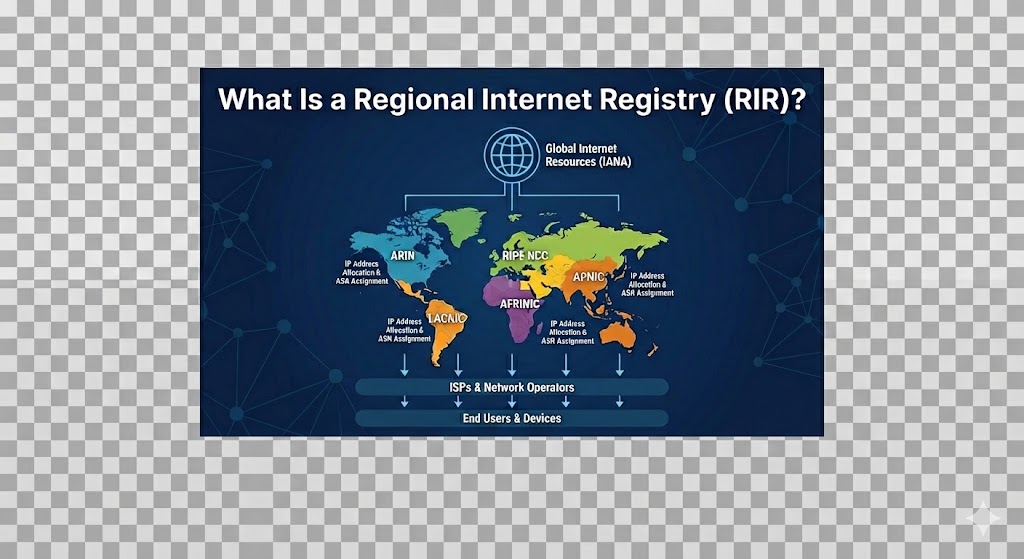
Table of Contents
A Regional Internet Registry (RIR) is an organization responsible for the allocation and management of Internet number resources within a specific geographic region. These resources primarily include IP addresses (both IPv4 and IPv6) and Autonomous System Numbers (ASNs), which are critical components that allow devices and networks to communicate across the internet.
The internet does not function without a well-organized system for assigning unique IP addresses and routing identifiers. RIRs ensure this process is fair, efficient, and consistent within their respective regions, preventing conflicts and promoting transparency in internet governance.
The Five Global RIRs
There are five officially recognized RIRs, each responsible for a specific part of the world:
AFRINIC – African Network Information Centre (Africa)
APNIC – Asia Pacific Network Information Centre (Asia Pacific)
ARIN – American Registry for Internet Numbers (Canada, the USA, parts of the Caribbean)
LACNIC – Latin America and Caribbean Network Information Centre (Latin America and the Caribbean)
RIPE NCC – Réseaux IP Européens Network Coordination Centre (Europe, Middle East, Central Asia)
Each RIR operates independently but collaborates on global policies and best practices through coordination bodies like the Number Resource Organization (NRO) and under guidance from IANA (Internet Assigned Numbers Authority), a division of ICANN (Internet Corporation for Assigned Names and Numbers).
Why Are RIRs Important?
RIRs perform several essential functions:
- IP Address Allocation: They distribute IP addresses to Internet Service Providers (ISPs), data centers, and other organizations.
- Policy Development: Through community consultation, RIRs facilitate the creation of rules for how internet number resources are managed and allocated.
- Database Maintenance: RIRs maintain public databases (WHOIS) that record who holds which IP addresses and ASNs, helping with internet troubleshooting and security.
- IPv6 Promotion: As IPv4 addresses become scarce, RIRs promote and support the adoption of IPv6.
- Education and Training: RIRs often provide training and resources to support the technical community and help stakeholders understand network best practices.
How Do RIRs Work with Other Internet Governance Bodies?
RIRs are part of the global internet governance ecosystem. They coordinate closely with:
- ICANN (Internet Corporation for Assigned Names and Numbers): Oversees the global IP address space and domain names.
- IANA (Internet Assigned Numbers Authority): Allocates large blocks of IP addresses and ASNs to RIRs.
- NIRs (National Internet Registries): In some regions, countries have their own national registries under the umbrella of an RIR.
RIRs are not regulatory bodies. Instead, they are community-focused, nonprofit organizations that emphasize bottom-up decision-making.
Conclusion
A Regional Internet Registry plays a crucial role in ensuring that IP addresses and routing identifiers are allocated efficiently, transparently, and in a way that supports the growth and stability of the internet. They form a bridge between global internet governance structures and local communities, making them vital players in how the internet works and evolves. Understanding the role of RIRs is key for anyone involved in networking, cybersecurity, or internet policy.
Trusted IPv4 Leasing for Business Growth
Get enterprise-grade IPv4 space quickly, with seamless deployment and end-to-end management.
Get Started with i.leaseRelated Blogs
相关文章
关于 弹性IP地址 Elastic IP address: AWS 用户指南
在云计算中,保持 稳定的 IP 地址 对于 网站托管、应用程序和网络管理 至关重要。这就是 Elastic IP 地址(弹性 IP) 发挥作用的地方。如果你使用 亚马逊云 AWS,了解 Elastic IP 的工作原理,可以帮助你 提高可靠性、防止宕机,并优化云端成本。本文将详细介绍 Elastic IP 的定义、工作方式、优势及最佳实践。 什么是弹性 IP 地址? Elastic IP 地址 是 AWS 提供的静态公网 IPv4 地址,可分配给 Amazon EC2(Elastic Compute Cloud)实例。与普通公网 IP 不同,Elastic IP 在实例重启后不会更改,确保服务稳定运行。 弹性 IP 的工作原理 Elastic IP 地址来自 AWS 的 IP 地址池,并可随时分配给 EC2 实例。如果实例发生故障,你可以 快速将 Elastic IP 重新绑定到另一台实例,从而减少宕机时间,保持业务连续性。 ? Elastic IP 主要特点: ✔ 静态 IP 地址 – 不会随实例重启而改变。✔ 可自由分配 – 可在同一区域内的不同实例间切换。✔Read more Related Posts Short-term vs long-term IPv4 leasing Facing IPv4 shortages, companies must weigh cost, speed, and network growth when choosing a lease plan.Short-term leasing lets you scale Read more Why IPv4 scarcity drives economic value for operators IPv4 地址曾经只是互联网运行所需的基础资源。但在今天,它越来越像一种具有市场价格、可交易、可租赁的数字资产。造成这一变化的原因并不复杂:IPv4 的总量有限,而全球互联网对 IPv4 的需求并没有消失;与此同时,IPv6 虽然早已出现,但迁移进度依然缓慢。这三股力量叠加,正在重新塑造运营商对 IP 地址的看法,也改变了互联网基础设施的经济逻辑。原文将这点概括为“有限供给、持续需求与缓慢转型”,并指出这正在推动 IP 地址成为影响全球电信经济的可交易资产。 IPv4 稀缺并不是新问题 全球互联网至今仍大量依赖 IPv4。这个协议诞生于更早的时代,只能提供大约 43 亿个地址。这个数量在互联网初期似乎足够庞大,但在今天已经明显不够。原文指出,IANA 在 2011 年就已将最后一批大型 IPv4 Read more What Determines IPv4 Pricing in Today’s Market? Scarcity, shifting demand, and leasing platforms such as i.lease are reshaping how IPv4 addresses are valued and traded globally.IPv4 pricing is driven Read more .related-post {} .related-post .post-list { text-align: left; } .related-post .post-list .item { margin: 5px; padding: 10px; } .related-post .headline { font-size: 18px !important; color: #999999 !important; } .related-post .post-list .item .post_thumb { max-height: 220px; margin: 10px 0px; padding: 0px; display: block; } .related-post .post-list .item .post_title { font-size: 16px; color: #3f3f3f; margin: 10px 0px; padding: 0px; display: block; text-decoration: none; } .related-post .post-list .item .post_excerpt { font-size: 13px; color: #3f3f3f; margin: 10px 0px; padding: 0px; display: block; text-decoration: none; } @media only screen and (min-width: 1024px) { .related-post .post-list .item { width: 30%; } } @media only screen and (min-width: 768px) and (max-width: 1023px) { .related-post .post-list .item { width: 90%; } } @media only screen and (min-width: 0px) and (max-width: 767px) { .related-post .post-list .item { width: 90%; } }
为什么没有 IPv5?互联网协议背后的故事
在讨论互联网协议时,大多数人都熟悉 IPv4 和 IPv6。但你可能会问 IPv5 发生了什么?为什么互联网似乎从 IPv4 跳到了 IPv6?让我们深入了解一下这个 “失踪 ”协议背后的精彩历史。 IPv5 是什么? IPv5 正式名称为互联网流协议(ST),是 20 世纪 70 年代末和 80 年代开发的一种实验性协议。它旨在支持通过 IP 网络传输语音和视频等实时多媒体数据流。与在无连接基础上运行的 IPv4 不同,IPv5 旨在创建一个面向连接的通信系统,以提高多媒体性能。 为什么 IPv5 没有成为下一个主要互联网协议? 尽管 IPv5 具有创新性,但从未被广泛采用。原因就在这里: 1) IP 地址空间限制 IPv5 使用与 IPv4 相同的 32 位地址空间。随着互联网的快速发展,IPv4 地址耗尽成为一个关键问题,这使得 IPv5 的寻址系统同样无法满足未来的需求。 2) 技术转型 随着对可扩展性更强的解决方案的需求不断增长,开发人员将重点放在创建 IPv6 上,IPv6 引入了 128 位寻址,解决了地址短缺的问题,并增加了内置安全性和简化网络管理等增强功能。 3) 试验状况 IPv5 从未打算长期取代 IPv4。它被分配的协议编号为 5,用于试验性使用,协议栈中的这一保留意味着它以后不能被重新命名为未来版本的 IP。 为什么 IPv6 取代了 IPv4(而非 IPv5) IPv6 被设计为 IPv4 的全面升级版,解决了地址短缺等局限性问题,提高了互联网通信的效率。它已成为满足现代网络需求的标准协议,而 IPv5Read more Related Posts Short-term vs long-term IPv4 leasing Facing IPv4 shortages, companies must weigh cost, speed, and network growth when choosing a lease plan.Short-term leasing lets you scale Read more Why IPv4 scarcity drives economic value for operators IPv4 地址曾经只是互联网运行所需的基础资源。但在今天,它越来越像一种具有市场价格、可交易、可租赁的数字资产。造成这一变化的原因并不复杂:IPv4 的总量有限,而全球互联网对 IPv4 的需求并没有消失;与此同时,IPv6 虽然早已出现,但迁移进度依然缓慢。这三股力量叠加,正在重新塑造运营商对 IP 地址的看法,也改变了互联网基础设施的经济逻辑。原文将这点概括为“有限供给、持续需求与缓慢转型”,并指出这正在推动 IP 地址成为影响全球电信经济的可交易资产。 IPv4 稀缺并不是新问题 全球互联网至今仍大量依赖 IPv4。这个协议诞生于更早的时代,只能提供大约 43 亿个地址。这个数量在互联网初期似乎足够庞大,但在今天已经明显不够。原文指出,IANA 在 2011 年就已将最后一批大型 IPv4 Read more How much does a /24 IPv4 block cost in 2026? IPv4 scarcity continues to shape internet infrastructure, with /24 blocks still trading actively on global markets despite growing IPv6 adoption. Key Read more .related-post {} .related-post .post-list { text-align: left; } .related-post .post-list .item { margin: 5px; padding: 10px; } .related-post .headline { font-size: 18px !important; color: #999999 !important; } .related-post .post-list .item .post_thumb { max-height: 220px; margin: 10px 0px; padding: 0px; display: block; } .related-post .post-list .item .post_title { font-size: 16px; color: #3f3f3f; margin: 10px 0px; padding: 0px; display: block; text-decoration: none; } .related-post .post-list .item .post_excerpt { font-size: 13px; color: #3f3f3f; margin: 10px 0px; padding: 0px; display: block; text-decoration: none; } @media only screen and (min-width: 1024px) { .related-post .post-list .item { width: 30%; } } @media only screen and (min-width: 768px) and (max-width: 1023px) { .related-post .post-list .item { width: 90%; } } @media only screen and (min-width: 0px) and (max-width: 767px) { .related-post .post-list .item { width: 90%; } }
IP 子网设置和 CIDR:互联网专员指南
在互联网通信中,IP 寻址是使设备能够无缝连接和交换信息的基础技术。对于互联网服务提供商(ISP)和 IT 专业人员来说,了解 IP 子网划分和 CIDR(无类域间路由)对于高效网络管理和可扩展性至关重要。 本文章将深入探讨 IP 子网划分和 CIDR 概念,重点介绍它们的意义和实际应用。 IP 子网设置? IP 子网划分是将大型 IP 网络划分为更小、更易于管理的网段(称为子网)的过程。这就像把一大块土地分割成较小的地块,供特定用途使用,以便更好地组织和利用。 为什么要建立子网? 高效使用 IP 地址: IPv4 地址空间有限,子网划分可确保根据不同网段的具体需求分配地址。 提高安全性: 通过划分网络,可以隔离敏感数据,降低未经授权访问的风险。 减少网络流量: 子网划分可将流量定位在每个子网内,从而减少拥塞并提高性能。 CIDR:无类域间路由 CIDR 引入于 20 世纪 90 年代,它取代了僵化的基于类的 IP 寻址系统。CIDR 允许使用长度可变的子网掩码,从而提供了一种更灵活、更高效的 IP 地址分配方式。 CIDR 的主要特征 可变长度子网掩码 (VLSM): CIDR 允许网络管理员定义不同长度的子网掩码,从而优化地址利用率。 聚合(Supernetting): CIDR 支持路由聚合,将多个 IP 网络合并为一个单一的汇总路由。这可以减少路由表的大小,提高路由器的效率。 消除类别: 传统的 IP 类别(A、B、C)不再具有限制性;有了 CIDR,地址的网络部分由前缀长度定义(如/8、/16、/24)。 子网设置和 CIDR 的实际应用 1. 高效分配 IP 地址 互联网服务提供商经常面临为客户高效分配 IP 地址的挑战。利用 CIDR,ISP 可以为需要 4Read more Related Posts Short-term vs long-term IPv4 leasing Facing IPv4 shortages, companies must weigh cost, speed, and network growth when choosing a lease plan.Short-term leasing lets you scale Read more Why IPv4 scarcity drives economic value for operators IPv4 地址曾经只是互联网运行所需的基础资源。但在今天,它越来越像一种具有市场价格、可交易、可租赁的数字资产。造成这一变化的原因并不复杂:IPv4 的总量有限,而全球互联网对 IPv4 的需求并没有消失;与此同时,IPv6 虽然早已出现,但迁移进度依然缓慢。这三股力量叠加,正在重新塑造运营商对 IP 地址的看法,也改变了互联网基础设施的经济逻辑。原文将这点概括为“有限供给、持续需求与缓慢转型”,并指出这正在推动 IP 地址成为影响全球电信经济的可交易资产。 IPv4 稀缺并不是新问题 全球互联网至今仍大量依赖 IPv4。这个协议诞生于更早的时代,只能提供大约 43 亿个地址。这个数量在互联网初期似乎足够庞大,但在今天已经明显不够。原文指出,IANA 在 2011 年就已将最后一批大型 IPv4 Read more What Determines IPv4 Pricing in Today’s Market? Scarcity, shifting demand, and leasing platforms such as i.lease are reshaping how IPv4 addresses are valued and traded globally.IPv4 pricing is driven Read more .related-post {} .related-post .post-list { text-align: left; } .related-post .post-list .item { margin: 5px; padding: 10px; } .related-post .headline { font-size: 18px !important; color: #999999 !important; } .related-post .post-list .item .post_thumb { max-height: 220px; margin: 10px 0px; padding: 0px; display: block; } .related-post .post-list .item .post_title { font-size: 16px; color: #3f3f3f; margin: 10px 0px; padding: 0px; display: block; text-decoration: none; } .related-post .post-list .item .post_excerpt { font-size: 13px; color: #3f3f3f; margin: 10px 0px; padding: 0px; display: block; text-decoration: none; } @media only screen and (min-width: 1024px) { .related-post .post-list .item { width: 30%; } } @media only screen and (min-width: 768px) and (max-width: 1023px) { .related-post .post-list .item { width: 90%; } } @media only screen and (min-width: 0px) and (max-width: 767px) { .related-post .post-list .item { width: 90%; } }