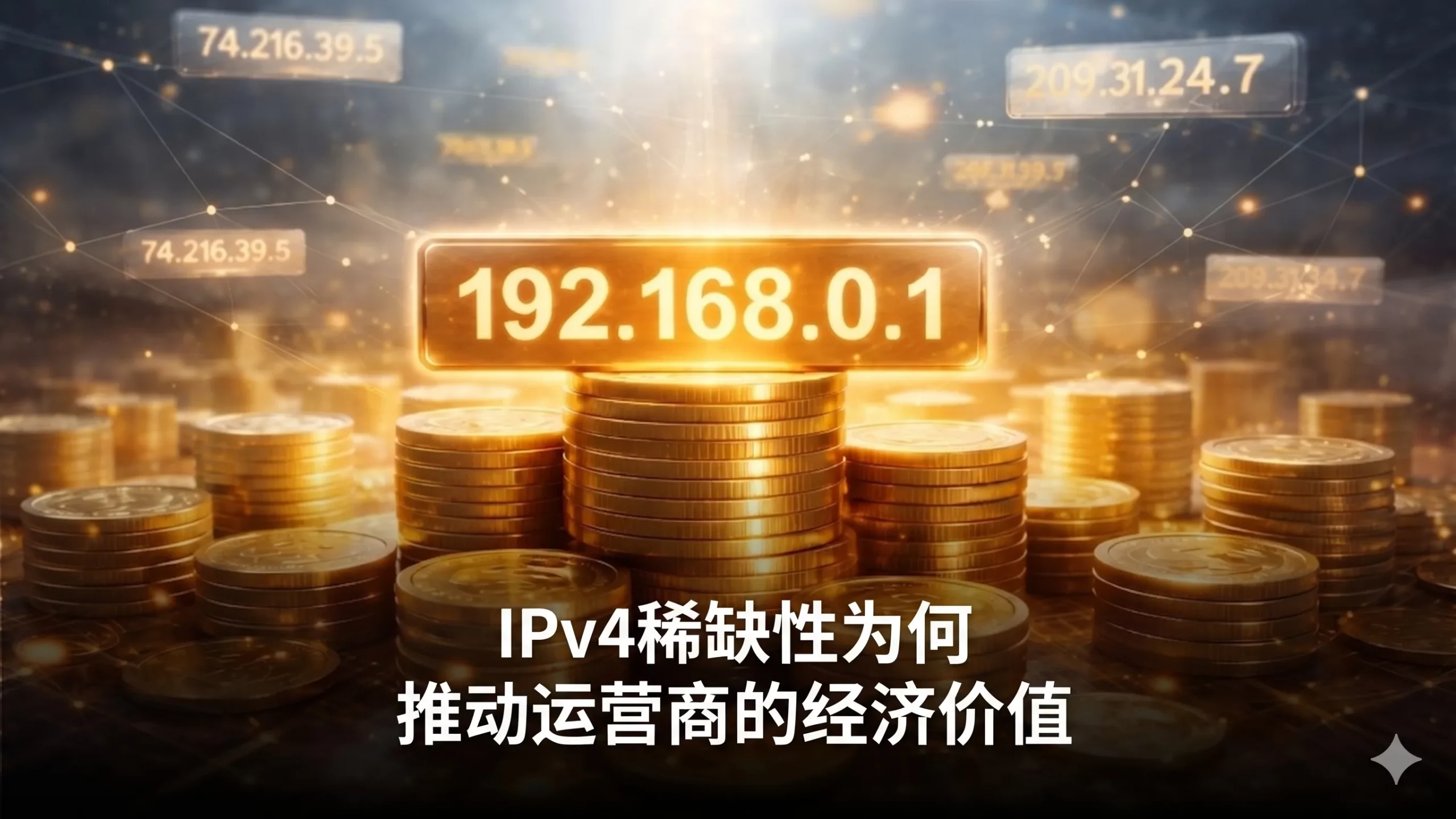
Why IPv4 scarcity drives economic value for operators
Finite IPv4 supply, persistent demand, and slow IPv6 transition are turning IP addresses into tradable assets shaping telecom economics globally.
Table of Contents
- IPv4 exhaustion has transformed addresses into scarce digital commodities, with prices driven by supply-demand imbalance.
- Operators increasingly monetise unused address space via leasing platforms such as i.lease, reshaping network economics.
The structural roots of IPv4 scarcity
The global internet still runs largely on a protocol designed in an earlier era. IPv4 provides roughly 4.3 billion addresses, a number that once appeared vast but is now structurally insufficient.
The exhaustion of this pool is not recent. The Internet Assigned Numbers Authority distributed the last large blocks of IPv4 addresses to regional registries in 2011, marking a turning point in internet infrastructure economics.
What followed was not a collapse, but an adaptation. Network operators, cloud providers, and telecom firms began treating IP addresses less as technical identifiers and more as finite resources requiring allocation strategies, pricing mechanisms, and, increasingly, financial optimisation.
As one long-standing industry observer, Geoff Huston of APNIC, noted, IPv4 markets emerged as an “inevitable” consequence of address depletion.
From technical resource to economic asset
Scarcity alone does not create value; persistent demand does. IPv4 continues to underpin most global connectivity, particularly where legacy systems, compatibility requirements, and customer reach remain tied to it.
This creates a paradox. While IPv6 exists as a technically superior and effectively unlimited alternative, the installed base of IPv4-dependent systems sustains demand.
The result is a classic supply-demand imbalance. As one analysis notes, IPv4 prices rise because “supply is low and demand is high”.
Over time, this imbalance has transformed IPv4 addresses into commodities. Prices that once hovered around $15 per address in 2014 have climbed to $40–$50 in recent years, with peaks even higher.
The language surrounding IPv4 has shifted accordingly: from allocation to valuation, from assignment to trading.
Price dynamics and market volatility
The IPv4 market is neither static nor uniform. Prices fluctuate based on block size, geographic demand, and macroeconomic conditions.
Historical data shows a sharp upward trajectory: from as little as $6–$24 per address in 2014 to as much as $60 by 2021.
More recent data suggests a degree of stabilisation and even decline in certain segments. By 2025, some large address blocks fell below $20 per address, reflecting changing supply patterns and increased market liquidity.
Yet volatility does not negate value. Instead, it reinforces the notion that IPv4 operates as a functioning market, subject to cycles, speculation, and strategic withholding.
Huston has warned that such dynamics can resemble a feedback loop, where scarcity drives price increases, which in turn incentivise further scarcity through hoarding.
Why operators hold — and monetise — IPv4 assets
For network operators, IPv4 addresses are no longer passive infrastructure. They are balance-sheet assets.
Large address blocks can be transferred for significant sums, sometimes amounting to hundreds of thousands of dollars per transaction.
Operators therefore face a strategic choice:
- Use addresses internally to support subscriber growth
- Sell them outright for capital
- Lease them to generate recurring revenue
Leasing, in particular, has emerged as a flexible alternative. Rather than committing to permanent divestment, operators can monetise unused address space while retaining long-term optionality.
Platforms such as i.lease reflect this shift, enabling address holders to participate in a structured leasing market.
The rise of IPv4 leasing platforms like i.lease
The emergence of leasing platforms represents a maturation of the IPv4 economy.
Historically, address transfers required brokers, regulatory approvals, and lengthy due diligence processes. Today, leasing introduces liquidity and flexibility.
According to industry guidance, leasing can be advantageous for organisations with rapidly changing network needs, offering short-term access without long-term capital commitment.
For operators, this transforms IPv4 into a yield-generating asset class. Idle address space can be deployed in the market, generating income streams similar to infrastructure leasing in other sectors.
i.lease reflects this emerging ecosystem, where IPv4 is no longer simply consumed but actively traded and rented.
-IPv4 is the Internet’s most important service enabler; a device or server cannot be online without it.
– Heng.Lu, CEO of LARUS Limited and founder of the LARUS Foundation
Scarcity as a driver of operational behaviour
Scarcity does more than influence prices; it reshapes behaviour.
Internet service providers increasingly reserve public IPv4 addresses for high-value customers, while relying on techniques such as network address translation (NAT) for mass-market users.
This introduces tiered access to the internet itself, where direct addressing becomes a premium feature.
At the same time, scarcity incentivises efficiency. Higher prices encourage operators to optimise utilisation, reclaim unused addresses, and audit legacy allocations.
As one analysis puts it, market pricing acts as “an incentive for efficient address utilisation”.
The slow transition to IPv6
In theory, IPv6 resolves the scarcity problem entirely. Its address space is effectively limitless.
In practice, adoption remains uneven.
Transitioning to IPv6 requires investment, coordination, and compatibility adjustments across networks, devices, and applications.
As long as a significant portion of the internet remains IPv4-dependent, demand persists.
This creates a prolonged coexistence, where IPv4 retains economic value even as IPv6 expands technically.
The implication is structural: IPv4 scarcity is not a temporary anomaly but a sustained condition shaped by inertia and interoperability constraints.
A market defined by uncertainty
The long-term future of IPv4 value remains uncertain.
Some analysts argue that prices could continue rising if demand outpaces the pace of IPv6 adoption. Others warn of a potential market correction once IPv6 reaches critical mass.
Huston describes this as a tipping point: when IPv6 dominance reduces demand for IPv4, the market could “quickly collapse”.
Until then, IPv4 exists in a state of managed scarcity, where its value is maintained not only by technical necessity but by economic behaviour.
i.lease and the financialisation of internet infrastructure
The emergence of platforms like i.lease signals a broader shift: the financialisation of internet infrastructure.
IPv4 addresses are increasingly treated as tradable, leasable, and investable assets. This aligns them with other forms of digital infrastructure, such as data centres and spectrum licences.
The implications are structural:
- Operators become asset managers as well as service providers
- Markets introduce price signals into network design decisions
- Scarcity becomes embedded in business models, not just technical constraints
This evolution raises questions about governance, allocation fairness, and the long-term sustainability of a market built on a legacy protocol.
Frequently Asked Questions
1. Why are IPv4 addresses scarce?
IPv4 provides about 4.3 billion addresses, and the global pool has been exhausted due to internet growth and device proliferation.
2. Why do IPv4 addresses still have value?
Because demand remains high while supply is fixed, creating a persistent imbalance that drives prices upward.
3. What is IPv4 leasing?
IPv4 leasing allows organisations to rent address space temporarily instead of buying it outright, improving flexibility and liquidity.
4. How much do IPv4 addresses cost?
Prices have ranged from under $10 per address a decade ago to $40–$60 at peak levels, with fluctuations depending on market conditions.
5. Will IPv6 make IPv4 obsolete?
Eventually, yes—but slow adoption means IPv4 will likely retain value for years, sustaining its market in the medium term.
Related Blogs
相关文章
关于 弹性IP地址 Elastic IP address: AWS 用户指南
在云计算中,保持 稳定的 IP 地址 对于 网站托管、应用程序和网络管理 至关重要。这就是 Elastic IP 地址(弹性 IP) 发挥作用的地方。如果你使用 亚马逊云 AWS,了解 Elastic IP 的工作原理,可以帮助你 提高可靠性、防止宕机,并优化云端成本。本文将详细介绍 Elastic IP 的定义、工作方式、优势及最佳实践。 什么是弹性 IP 地址? Elastic IP 地址 是 AWS 提供的静态公网 IPv4 地址,可分配给 Amazon EC2(Elastic Compute Cloud)实例。与普通公网 IP 不同,Elastic IP 在实例重启后不会更改,确保服务稳定运行。 弹性 IP 的工作原理 Elastic IP 地址来自 AWS 的 IP 地址池,并可随时分配给 EC2 实例。如果实例发生故障,你可以 快速将 Elastic IP 重新绑定到另一台实例,从而减少宕机时间,保持业务连续性。 ? Elastic IP 主要特点: ✔ 静态 IP 地址 – 不会随实例重启而改变。✔ 可自由分配 – 可在同一区域内的不同实例间切换。✔Read more Related Posts Why IPv4 scarcity drives economic value for operators Finite IPv4 supply, persistent demand, and slow IPv6 transition are turning IP addresses into tradable assets shaping telecom economics globally. IPv4 Read more What Determines IPv4 Pricing in Today’s Market? Scarcity, shifting demand, and leasing platforms such as i.lease are reshaping how IPv4 addresses are valued and traded globally.IPv4 pricing is driven Read more How much does a /24 IPv4 block cost in 2026? IPv4 scarcity continues to shape internet infrastructure, with /24 blocks still trading actively on global markets despite growing IPv6 adoption. Key Read more .related-post {} .related-post .post-list { text-align: left; } .related-post .post-list .item { margin: 5px; padding: 10px; } .related-post .headline { font-size: 18px !important; color: #999999 !important; } .related-post .post-list .item .post_thumb { max-height: 220px; margin: 10px 0px; padding: 0px; display: block; } .related-post .post-list .item .post_title { font-size: 16px; color: #3f3f3f; margin: 10px 0px; padding: 0px; display: block; text-decoration: none; } .related-post .post-list .item .post_excerpt { font-size: 13px; color: #3f3f3f; margin: 10px 0px; padding: 0px; display: block; text-decoration: none; } @media only screen and (min-width: 1024px) { .related-post .post-list .item { width: 30%; } } @media only screen and (min-width: 768px) and (max-width: 1023px) { .related-post .post-list .item { width: 90%; } } @media only screen and (min-width: 0px) and (max-width: 767px) { .related-post .post-list .item { width: 90%; } }
为什么没有 IPv5?互联网协议背后的故事
在讨论互联网协议时,大多数人都熟悉 IPv4 和 IPv6。但你可能会问 IPv5 发生了什么?为什么互联网似乎从 IPv4 跳到了 IPv6?让我们深入了解一下这个 “失踪 ”协议背后的精彩历史。 IPv5 是什么? IPv5 正式名称为互联网流协议(ST),是 20 世纪 70 年代末和 80 年代开发的一种实验性协议。它旨在支持通过 IP 网络传输语音和视频等实时多媒体数据流。与在无连接基础上运行的 IPv4 不同,IPv5 旨在创建一个面向连接的通信系统,以提高多媒体性能。 为什么 IPv5 没有成为下一个主要互联网协议? 尽管 IPv5 具有创新性,但从未被广泛采用。原因就在这里: 1) IP 地址空间限制 IPv5 使用与 IPv4 相同的 32 位地址空间。随着互联网的快速发展,IPv4 地址耗尽成为一个关键问题,这使得 IPv5 的寻址系统同样无法满足未来的需求。 2) 技术转型 随着对可扩展性更强的解决方案的需求不断增长,开发人员将重点放在创建 IPv6 上,IPv6 引入了 128 位寻址,解决了地址短缺的问题,并增加了内置安全性和简化网络管理等增强功能。 3) 试验状况 IPv5 从未打算长期取代 IPv4。它被分配的协议编号为 5,用于试验性使用,协议栈中的这一保留意味着它以后不能被重新命名为未来版本的 IP。 为什么 IPv6 取代了 IPv4(而非 IPv5) IPv6 被设计为 IPv4 的全面升级版,解决了地址短缺等局限性问题,提高了互联网通信的效率。它已成为满足现代网络需求的标准协议,而 IPv5Read more Related Posts Why IPv4 scarcity drives economic value for operators Finite IPv4 supply, persistent demand, and slow IPv6 transition are turning IP addresses into tradable assets shaping telecom economics globally. IPv4 Read more What Determines IPv4 Pricing in Today’s Market? Scarcity, shifting demand, and leasing platforms such as i.lease are reshaping how IPv4 addresses are valued and traded globally.IPv4 pricing is driven Read more The future of IPv4 markets Despite IPv6 expansion, scarcity keeps IPv4 valuable, sustaining a global secondary market where addresses increasingly function as tradable digital assets.Finite Read more .related-post {} .related-post .post-list { text-align: left; } .related-post .post-list .item { margin: 5px; padding: 10px; } .related-post .headline { font-size: 18px !important; color: #999999 !important; } .related-post .post-list .item .post_thumb { max-height: 220px; margin: 10px 0px; padding: 0px; display: block; } .related-post .post-list .item .post_title { font-size: 16px; color: #3f3f3f; margin: 10px 0px; padding: 0px; display: block; text-decoration: none; } .related-post .post-list .item .post_excerpt { font-size: 13px; color: #3f3f3f; margin: 10px 0px; padding: 0px; display: block; text-decoration: none; } @media only screen and (min-width: 1024px) { .related-post .post-list .item { width: 30%; } } @media only screen and (min-width: 768px) and (max-width: 1023px) { .related-post .post-list .item { width: 90%; } } @media only screen and (min-width: 0px) and (max-width: 767px) { .related-post .post-list .item { width: 90%; } }
IP 子网设置和 CIDR:互联网专员指南
在互联网通信中,IP 寻址是使设备能够无缝连接和交换信息的基础技术。对于互联网服务提供商(ISP)和 IT 专业人员来说,了解 IP 子网划分和 CIDR(无类域间路由)对于高效网络管理和可扩展性至关重要。 本文章将深入探讨 IP 子网划分和 CIDR 概念,重点介绍它们的意义和实际应用。 IP 子网设置? IP 子网划分是将大型 IP 网络划分为更小、更易于管理的网段(称为子网)的过程。这就像把一大块土地分割成较小的地块,供特定用途使用,以便更好地组织和利用。 为什么要建立子网? 高效使用 IP 地址: IPv4 地址空间有限,子网划分可确保根据不同网段的具体需求分配地址。 提高安全性: 通过划分网络,可以隔离敏感数据,降低未经授权访问的风险。 减少网络流量: 子网划分可将流量定位在每个子网内,从而减少拥塞并提高性能。 CIDR:无类域间路由 CIDR 引入于 20 世纪 90 年代,它取代了僵化的基于类的 IP 寻址系统。CIDR 允许使用长度可变的子网掩码,从而提供了一种更灵活、更高效的 IP 地址分配方式。 CIDR 的主要特征 可变长度子网掩码 (VLSM): CIDR 允许网络管理员定义不同长度的子网掩码,从而优化地址利用率。 聚合(Supernetting): CIDR 支持路由聚合,将多个 IP 网络合并为一个单一的汇总路由。这可以减少路由表的大小,提高路由器的效率。 消除类别: 传统的 IP 类别(A、B、C)不再具有限制性;有了 CIDR,地址的网络部分由前缀长度定义(如/8、/16、/24)。 子网设置和 CIDR 的实际应用 1. 高效分配 IP 地址 互联网服务提供商经常面临为客户高效分配 IP 地址的挑战。利用 CIDR,ISP 可以为需要 4Read more Related Posts Why IPv4 scarcity drives economic value for operators Finite IPv4 supply, persistent demand, and slow IPv6 transition are turning IP addresses into tradable assets shaping telecom economics globally. IPv4 Read more What Determines IPv4 Pricing in Today’s Market? Scarcity, shifting demand, and leasing platforms such as i.lease are reshaping how IPv4 addresses are valued and traded globally.IPv4 pricing is driven Read more How much does a /24 IPv4 block cost in 2026? IPv4 scarcity continues to shape internet infrastructure, with /24 blocks still trading actively on global markets despite growing IPv6 adoption. Key Read more .related-post {} .related-post .post-list { text-align: left; } .related-post .post-list .item { margin: 5px; padding: 10px; } .related-post .headline { font-size: 18px !important; color: #999999 !important; } .related-post .post-list .item .post_thumb { max-height: 220px; margin: 10px 0px; padding: 0px; display: block; } .related-post .post-list .item .post_title { font-size: 16px; color: #3f3f3f; margin: 10px 0px; padding: 0px; display: block; text-decoration: none; } .related-post .post-list .item .post_excerpt { font-size: 13px; color: #3f3f3f; margin: 10px 0px; padding: 0px; display: block; text-decoration: none; } @media only screen and (min-width: 1024px) { .related-post .post-list .item { width: 30%; } } @media only screen and (min-width: 768px) and (max-width: 1023px) { .related-post .post-list .item { width: 90%; } } @media only screen and (min-width: 0px) and (max-width: 767px) { .related-post .post-list .item { width: 90%; } }